Network Simulator
UnetSim
A fast, flexible simulator for developing subsea communication protocols without getting wet.
Design Your Underwater Network
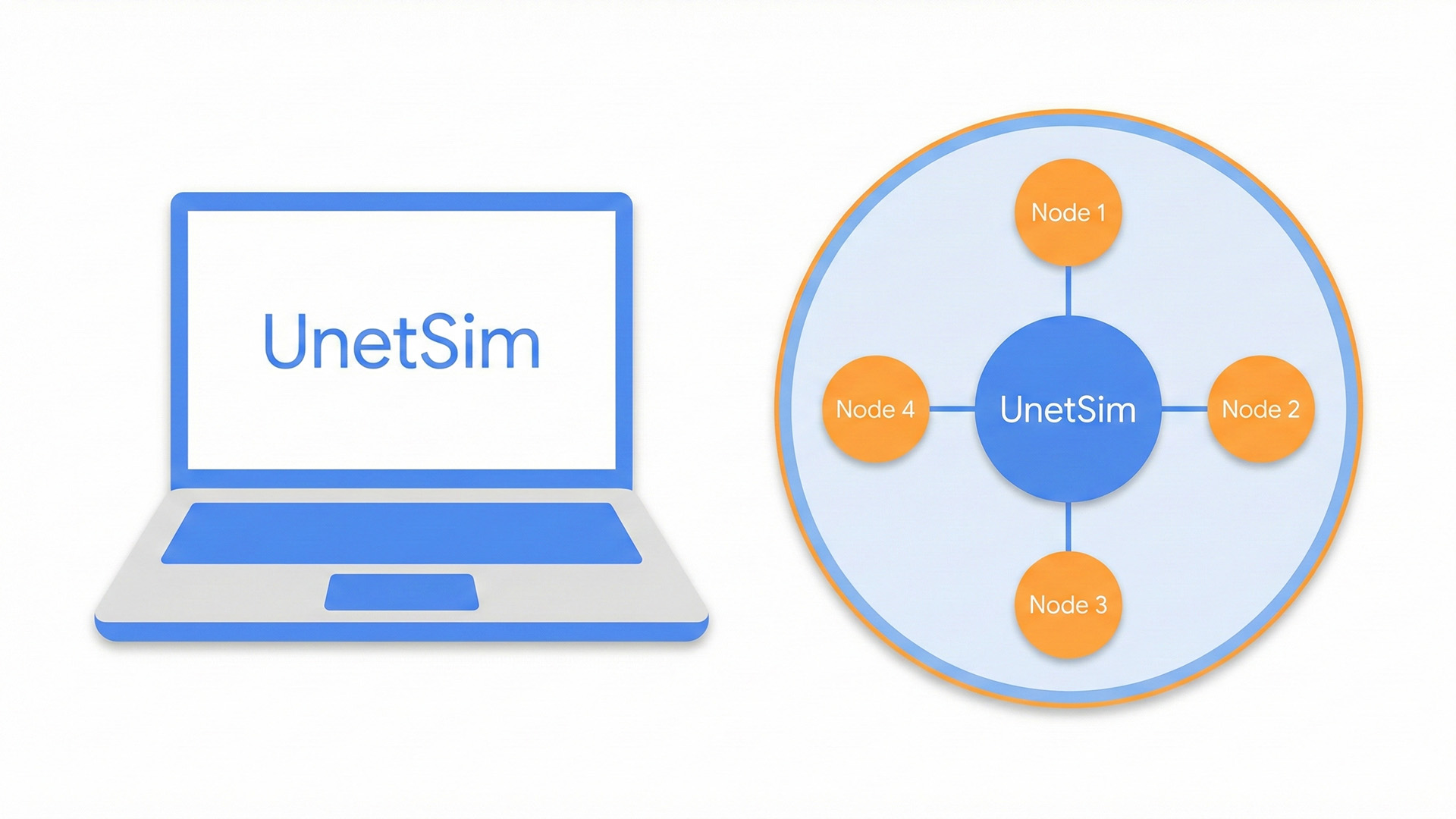
The Unet Simulator runs the same software stack used on our modems, providing full control across physical, MAC, network, transport and application layers.
It lets users design, test and validate underwater communication and networking solutions on a laptop, then deploy them at sea with zero code changes.
Key Capabilities
Everything you need to validate your protocols before hitting the water.
Large-Scale Simulation
Simulate networks with many nodes, including mobile platforms and autonomous vehicles.
Real-Time Mode
Run interactive simulations for debugging agents and protocols step-by-step.
Discrete-Event Mode
Execute fast Monte Carlo evaluations to gather statistical performance data.
Unified API
Uses the exact same programming model (Groovy/Java/Python) as real UnetStack hardware.
Use Cases
UnetSim allows you to rapidly design and validate networking and MAC-layer protocols in a fully controlled virtual environment.
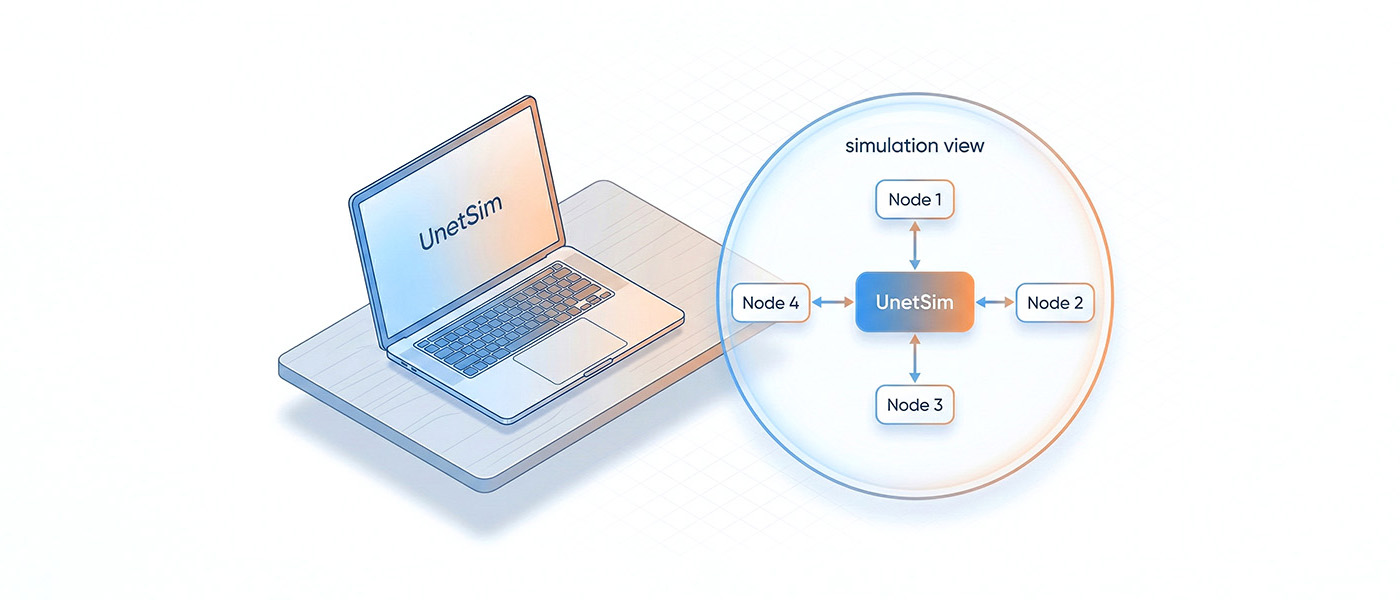
Simulating Network Behavior Using UnetSim
UnetSim lets you run both discrete-event and real-time simulations to model multiple subsea nodes—static or mobile—so you can design, develop, and evaluate your network protocols before moving to hardware testing.
Streamlined Workflow
From idea to ocean in three steps.
Prototype
Develop your protocol agents in Java or Groovy directly in the simulator.
Validate
Run real-time or discrete event simulations to prove robustness and performance metrics.
Deploy
Copy the exact same code to your modems. No cross-compilation needed.
Relevant Resources
Unet Handbook
Simulating underwater networks
Describes how to simulate underwater networks, including discrete-event or real-time simulations, configurable modem and channel models, and scalable networks with many nodes — using UnetSim.
Blog Article
Simulating motion in Unet Simulator
Explains how to simulate node mobility in UnetSim — using built-in dynamics or custom motion models — to test underwater network behavior under realistic motion conditions.