Case Study
Transforming Underwater Research
How Flexible, Software‐Defined Modems Empower Cutting‐Edge Research.
Overview
In the world of underwater acoustics research, scientists often face a difficult choice when selecting hardware. Most commercial acoustic systems are "black boxes" — built for specific communication tasks with rigid, closed architectures. They limit access to raw data, offer a single receive channel, and hide critical signal processing layers behind proprietary walls.
This case study explores how researchers at the Underwater Acoustic & Navigation Lab (ANL) led by Dr. Roee Diamant bypassed these limitations using Subnero’s software-defined smart modems to implement three distinct applications without requiring any custom hardware development.
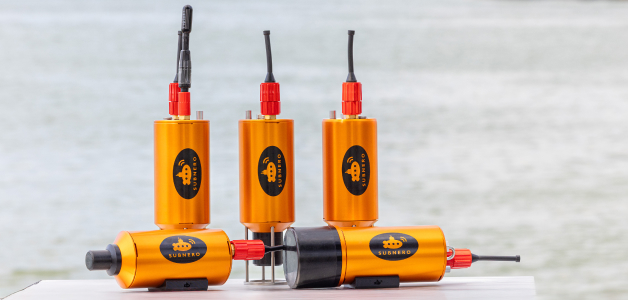
This is achieved because Subnero exposes the entire stack, from the acoustic front end to the processing interfaces to the user, rather than treating the modem as a closed communication appliance. This allows researchers to treat the modem as a high-performance edge computing platform with multiple communication interfaces.
About the Customer
The Underwater Acoustic & Navigation Lab (ANL) is a globally recognized research group specializing in underwater acoustics, navigation, and marine sensing. Their work spans advanced sonar methods, autonomous tracking, and multi‐target detection in complex underwater environments.
Why Subnero?
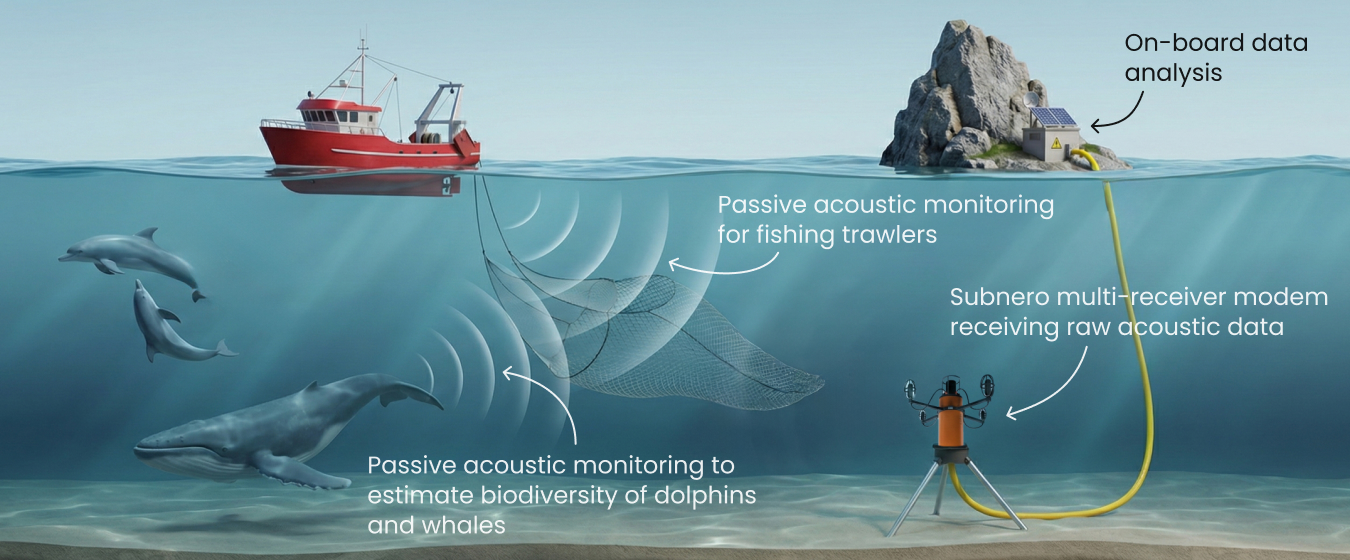
Across all the examples illustrated in this case study, the common requirement is a platform that offers full control over aspects such as signal generation, access to synchronized raw data from all channels, on-device user-accessible compute, and the flexibility to adapt the system to the experiment.
Key Benefits
-
Full Signal Chain Access
From waveform generation to synchronized raw data recording. -
Integrated Compute
The power of the Jetson Orin coprocessor to run complex algorithms (like beamforming) at the edge. -
Open Interfaces
The ability to develop using high-level languages like Python, speeding up the transition from hypothesis to experiment.
The Subnero modem operates as a truly flexible, software-defined, high-performance compute platform. By exposing the signal chain and having full access to raw data, we were able to rapidly implement complex, non-traditional acoustic applications without designing custom hardware.
Dr. Roee Diamant
Associate Professor
University of ANL, IsraelProfessor
University of Zagreb, FER, Croatia

Use Case 1: Midwater Motion Estimation
The Challenge
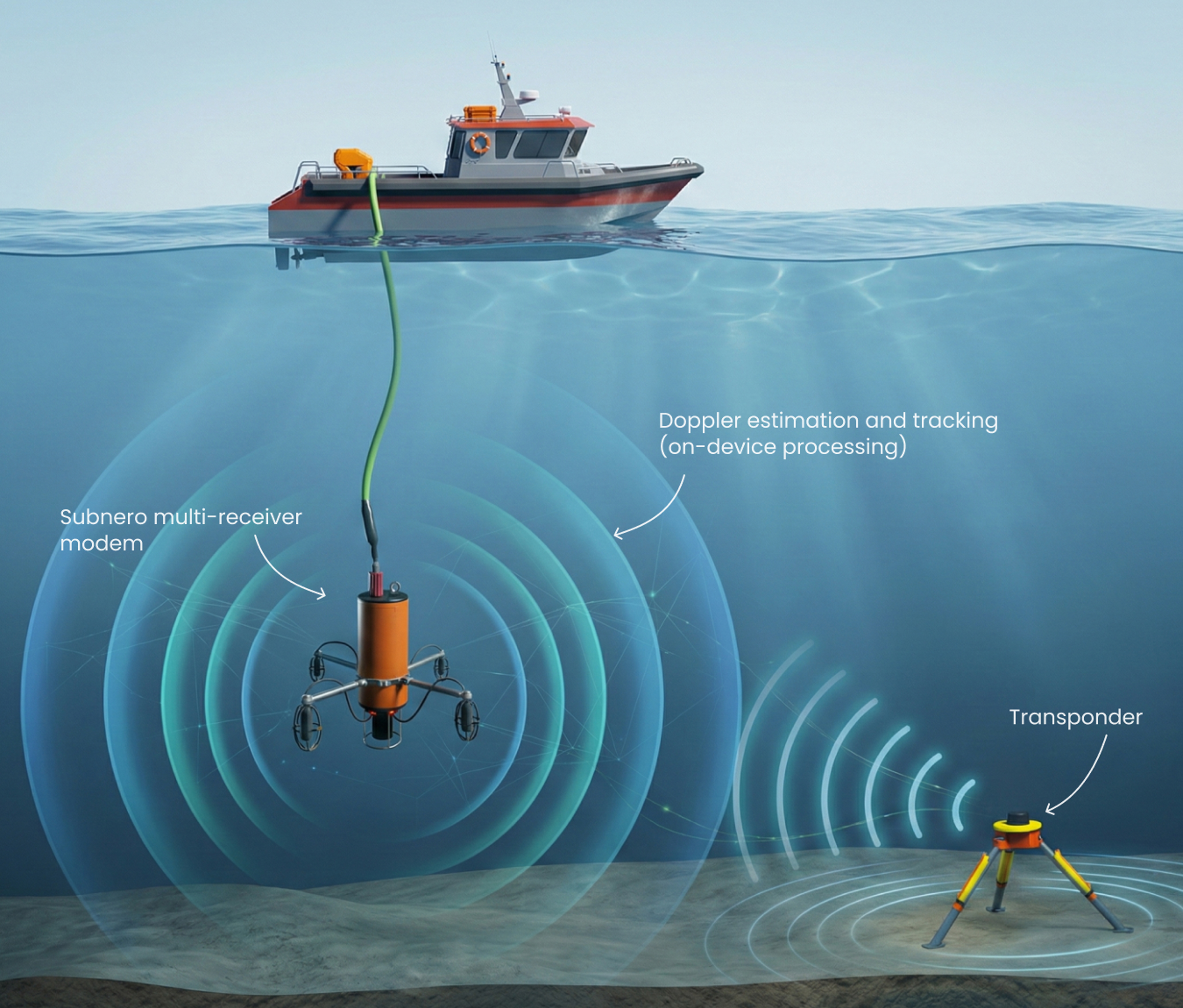
Estimating the motion of a receiver in the midwater column (suspended deployment) where seabed-referenced sensors like DVLs cannot be used.
The Implementation
-
Method
Researchers transmitted specially constructed reference waveforms to estimate Doppler shifts. -
Processing
By accessing raw baseband samples, they performed matched filtering across a Doppler grid. -
Edge Compute
Fine tracking and resampling corrections were executed in real-time on the modem’s integrated nVidia Jetson Orin coprocessor.
The Result
Successfully validated a novel Doppler-based acoustic localization system. The entire processing pipeline, built using Python, was run autonomously on a single underwater platform, demonstrating the efficiency and adaptability of the software-defined modem architecture.
Use Case 2: Lab-Grade Transducer Characterization
The Challenge
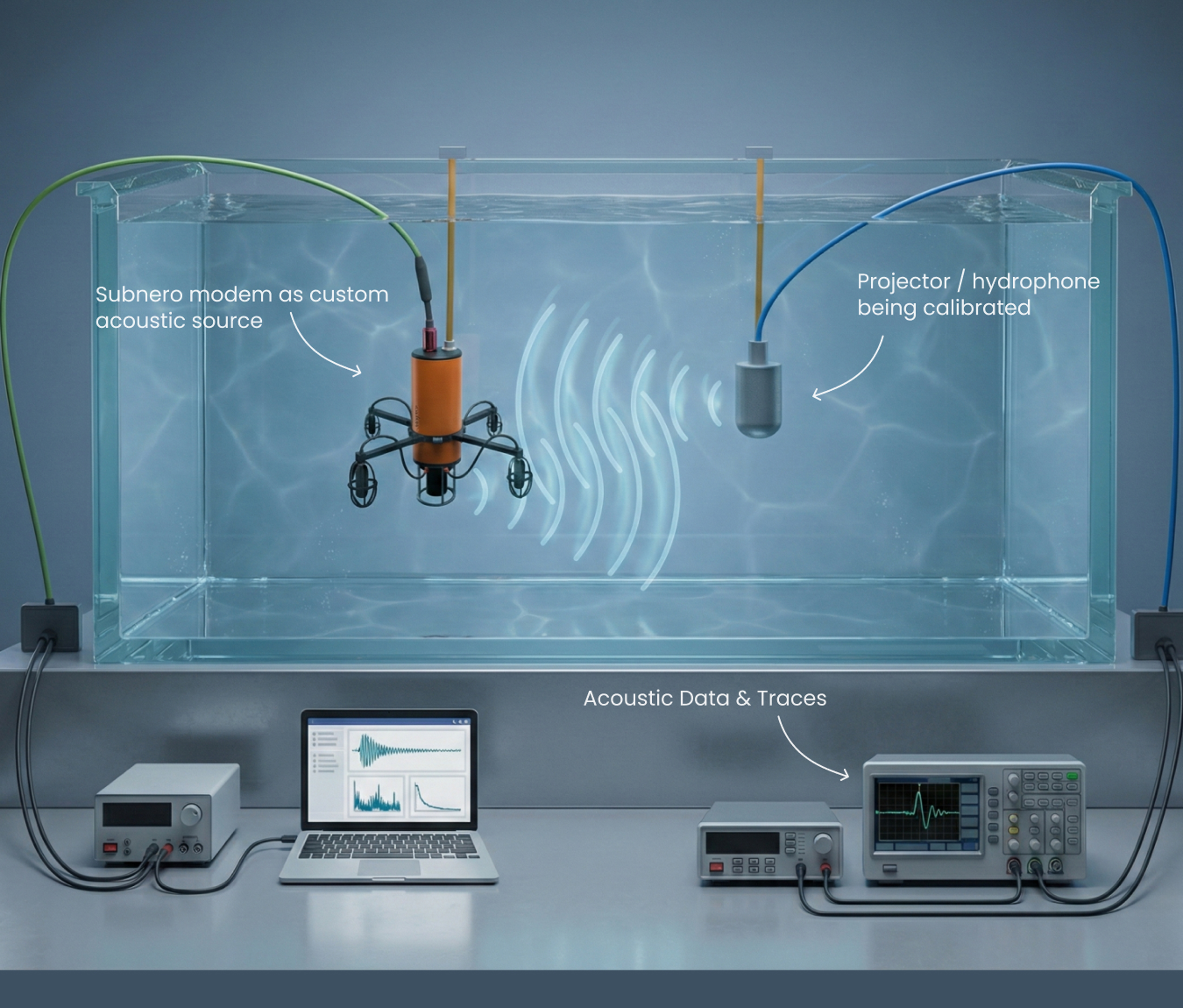
The laboratory manufactures its own hydrophones and projectors. Characterizing them typically requires expensive setups to measure parameters like voltage response and directionality.
The Implementation
-
Method
Subnero modems were used as custom acoustic sources to generate precise, repeatable signals. -
Waveforms
They transmitted short continuous-wave (CW) pulses and broadband sweeps to isolate direct-path arrivals. -
Data Capture
Synchronized recordings across multiple receivers were stored on the modem's 1 TB onboard storage for detailed post-processing.
The Result
Successfully performed high-fidelity characterization of transducers without investing in specialized infrastructure. By leveraging the modem’s unique features, the team transformed a communication device into a laboratory-grade acoustic test bench.
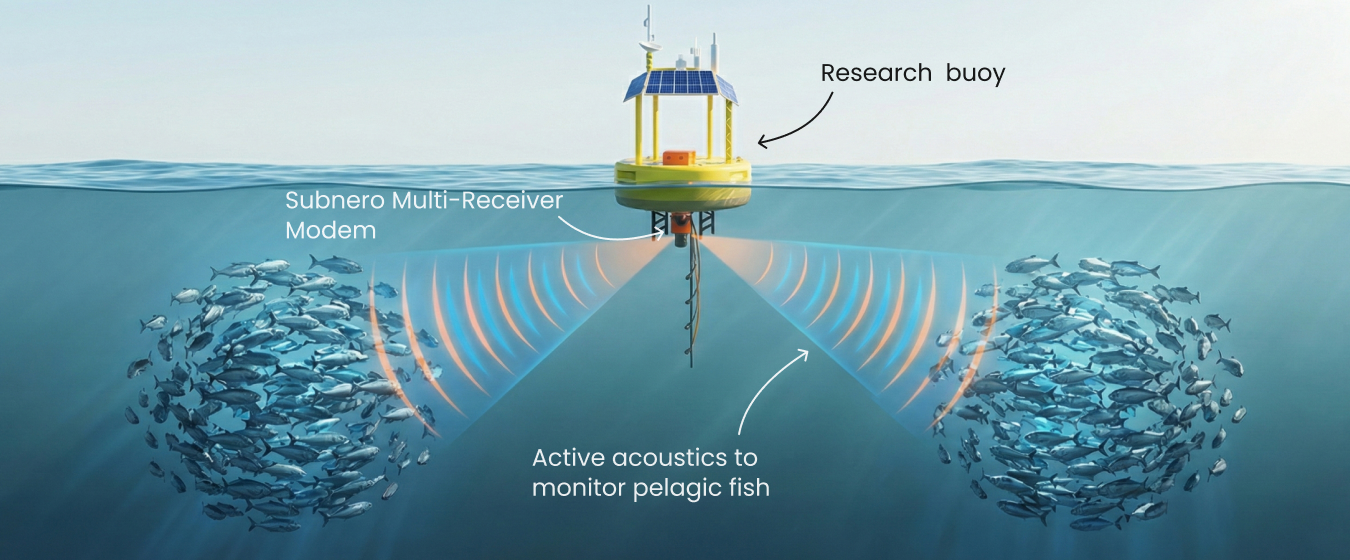
Use Case 3: Sonar for 3D Fish Tracking
The Challenge
Tracking faint, fast-moving biological targets using a compact, low-power acoustic array that inherently suffers from severe spatial ambiguities and overwhelming environmental clutter.
The Implementation
-
Method
A complete "track-before-detect" pipeline using broadband linear frequency-modulated chirps. -
Processing
The team implemented delay-and-sum beamforming across a four-element array, followed by CFAR detection and Kalman filtering. -
Validation
Sea trials in the Adriatic Sea confirmed the system's ability to track biological targets.
The Result
Successfully validated a novel Doppler-based acoustic localization system. The entire processing pipeline, built using Python, was run autonomously on a single underwater platform, demonstrating the efficiency and adaptability of the software-defined modem architecture.
The Subnero
Software-Defined Platform
ANL's success is rooted in the modem's open architecture, which provides full control over the acoustic signal chain, from waveform generation to synchronized raw data recording. This, combined with the integrated high-performance edge compute enables rapid development and real-time execution of complex algorithms, making the modem a flexible research instrument.