Case Study
Drop-In Integration: How LAUV Became Subnero Ready
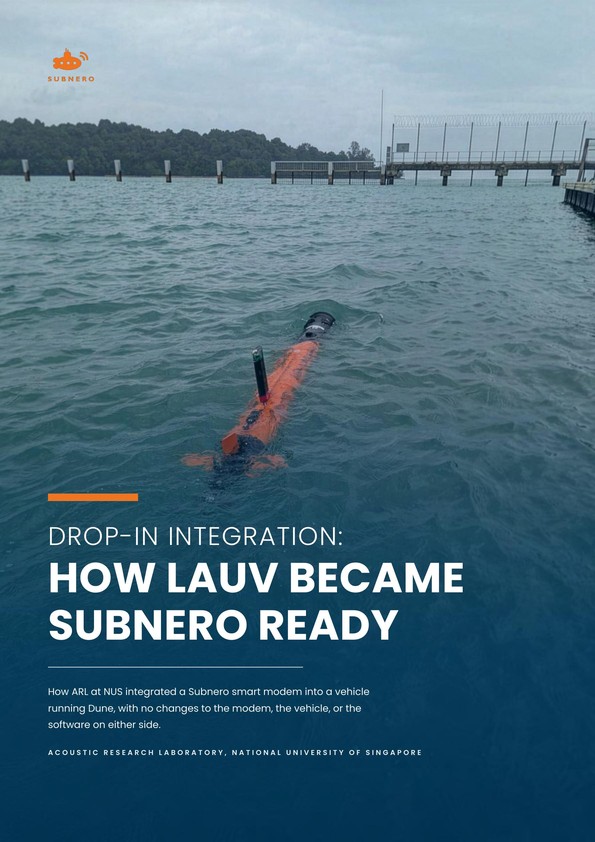
How ARL at NUS integrated a Subnero smart modem into a vehicle running Dune, with no changes to the modem, the vehicle, or the software on either side.
Acoustic Research Laboratory, National University of Singapore
Overview
When a research team puts a multi-hundred thousand or even million dollar AUV in the water, communication is what stands between a controlled mission and an anxious wait. Without a reliable acoustic link, every moment the vehicle is submerged is nerve wracking, the operators left to hope it surfaces where and when it should. Good communication turns those moments into command and control.
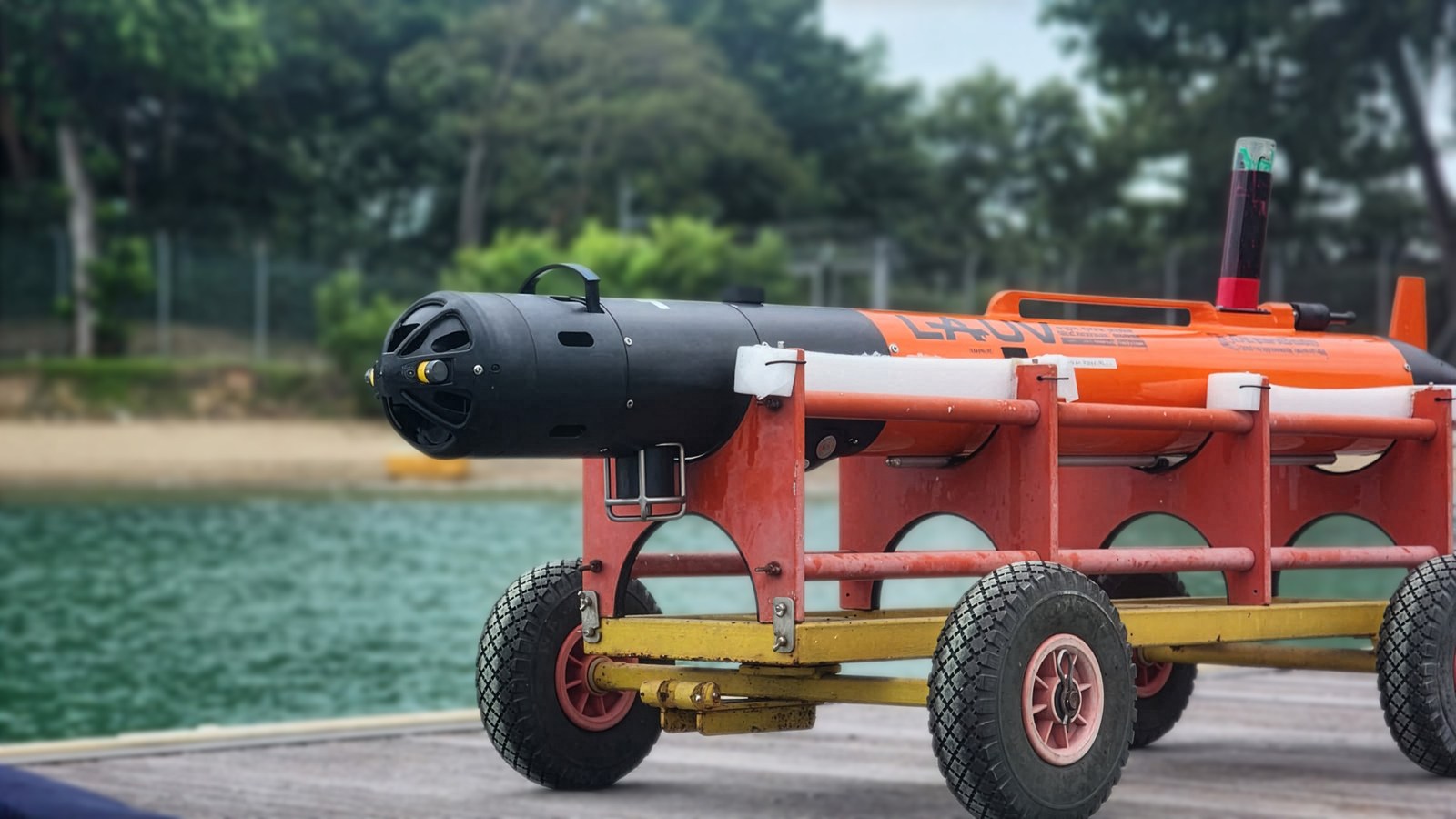
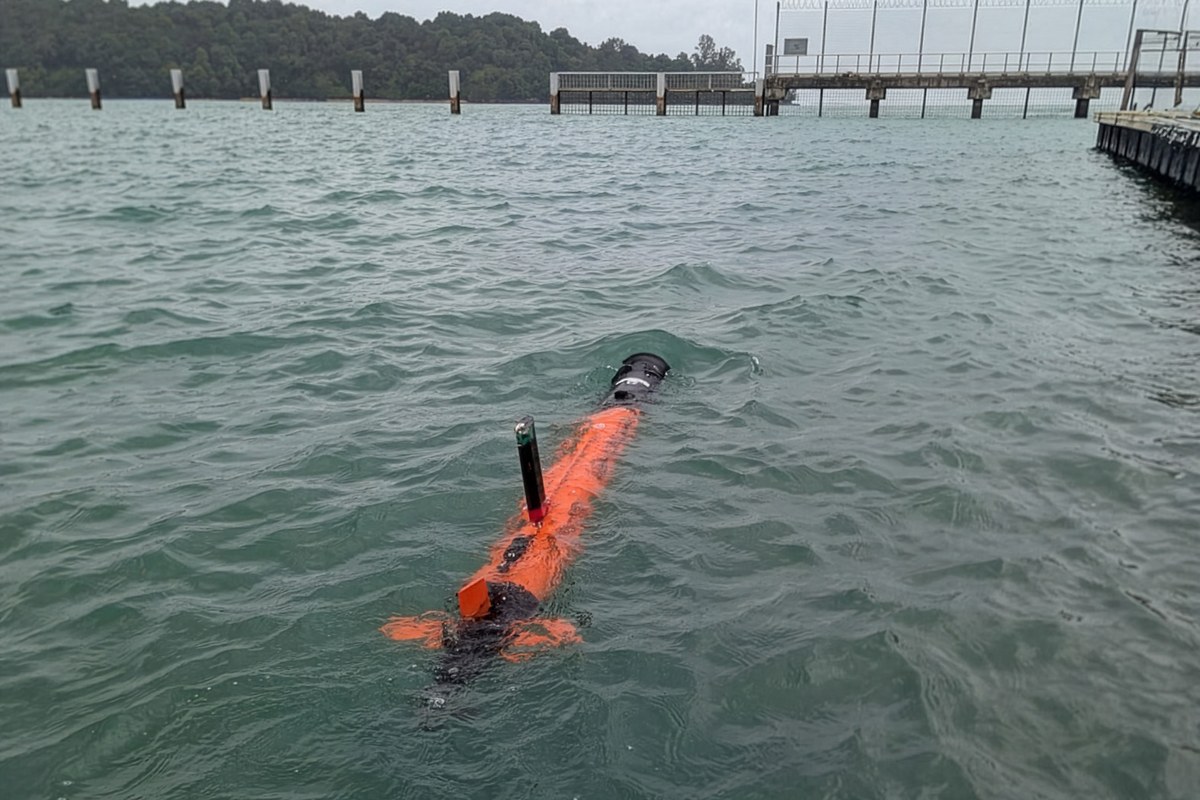
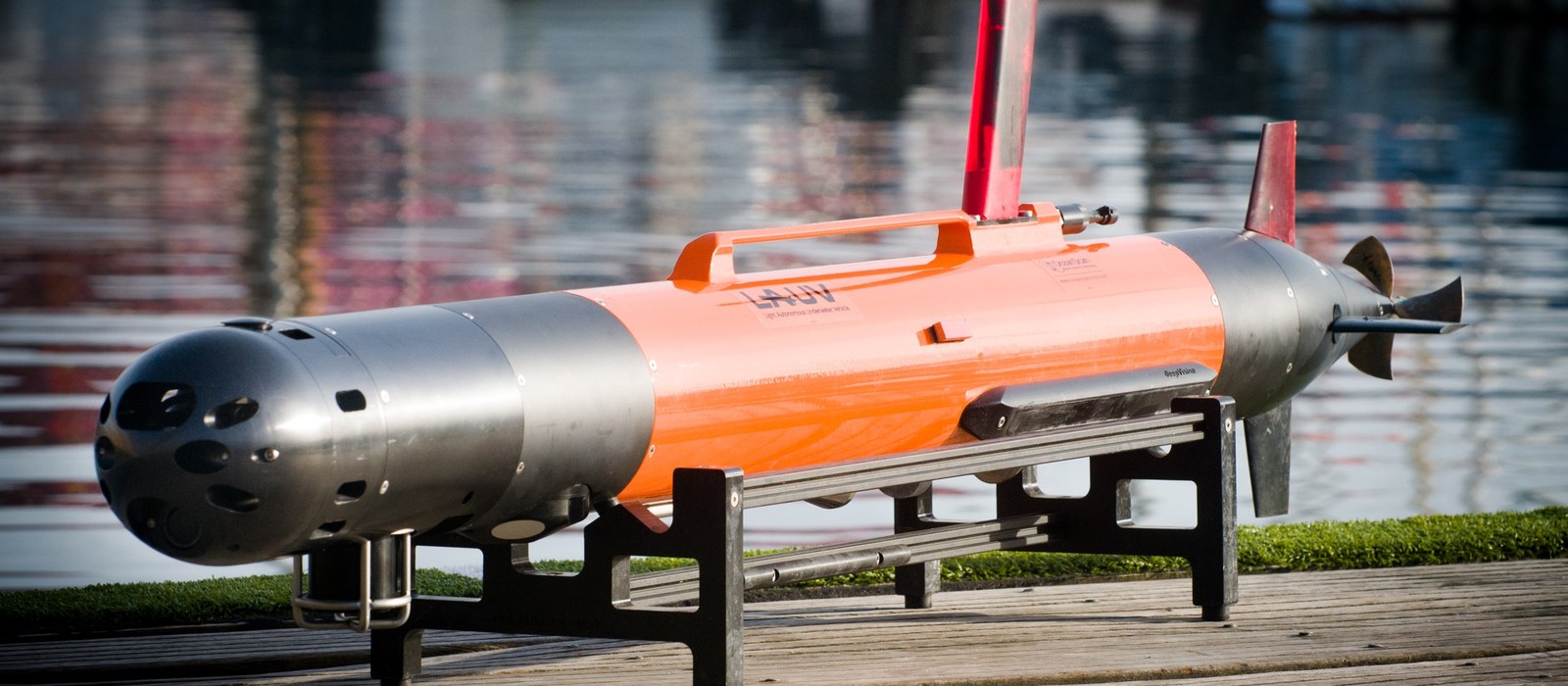
The Acoustic Research Laboratory (ARL) at the National University of Singapore needed a capable AUV for a range of demanding projects, often in challenging conditions: shallow tropical waters, the strong currents of the Singapore Strait, and operations close to busy shipping channels. They chose the OceanScan MST LAUV. To give it command and control that could stand up to those conditions, they integrated a Subnero smart modem. They did the work as a third party, with no customization to the modem or the vehicle, and only a small amount of fully user-defined software.
For anyone running an LAUV today, that makes the Subnero modem a drop-in.
“We simply mapped what UnetStack already exposes to what the Dune software already expects, and the console just saw the vehicle.
Rajat, ARL, NUS
Problem
The LAUV runs on the Dune software ecosystem and no integration with Subnero modems existed.
Solution
ARL built a small open source software bridge that runs on the modems themselves, while OceanScan MST handled the mechanical and electrical fit.
Result
Subnero modems are natively supported in the LAUV, with more than a year of reliable field operations in challenging waters.
The Challenge
Singapore waters are among the most demanding in the world for underwater acoustic communication.
Snapping shrimp blanket the warm, shallow soundscape with intense impulsive clicks, at source levels above 190 dB re 1 µPa at 1 m, producing heavy-tailed, non-Gaussian noise that degrades receivers designed around the usual Gaussian assumptions [1]. The shipping lanes add a second layer. Breaking waves and passing ships inject bubbles into the water column, and while the dense clouds clear within minutes, long-lived microbubbles of around 100 µm and smaller persist for hours and drift with the currents far beyond the lanes. With a ship passing every few minutes, their presence is effectively constant [2].
Subnero modems were built in exactly these waters, designed around the true noise statistics rather than the Gaussian ideal, and they bring advanced networking features well suited to AUV operations. The LAUV, however, runs on the Dune software ecosystem, and no integration between the two existed. The open questions were how hard it would be, at what level the work would sit, mechanical, electrical, or software, and who would have to carry it.
Someone had to build the bridge.
The Integration
It took one small software bridge and no changes to anything else.
Software
The software bridge between UnetStack, the network stack that runs on every Subnero modem, and Dune was built entirely by ARL and is now open source at github.com/org-arl/unet-dune. No source code was modified on either side. Dune was not patched and UnetStack was not touched. The bridge is a pair of small UnetStack agents, LAUVModem on the vehicle modem and MantaModem on the topside modem, written in Groovy and running on the modems themselves, so no companion computer or extra hardware went into the vehicle.
What made it simple is that Dune already defines a generic abstraction for an underwater acoustic modem, and the bridge implements it. Each agent speaks IMC, Dune's native message protocol, over TCP to its co-located Dune, and forwards traffic acoustically to the peer modem. To Dune, the acoustic link looks like an ordinary TCP transport.
In the Vehicle
LAUV Dune
- ▼ UamTxFrame · UamTxRange
- ▲ UamRxFrame · UamRxRange
IMC over TCP · port 9999
LAUVModem agent
UnetStack · runs on the vehicle modem
Acoustic
Link
((( ⇆ )))
Topside
Topside Dune / Neptus
- ▼ UamTxFrame · UamTxRange
- ▲ UamRxFrame · UamRxRange
IMC over TCP · port 9998
MantaModem agent
UnetStack · runs on the topside modem, MANTA gateway
On the Dune side there is no new code at all, only a short block of configuration using the standard Transports.TCP.Client task that Dune already ships with:
[Transports.TCP.Client]
Enabled          = Always
Entity Label     = Acoustic Modem
Server - Address = <IP of the co-located Subnero modem>
Server - Port    = 9999
Transports       = UamTxFrame,
                   UamTxRange,
                   VehicleMedium
A matching block on the topside points at the modem in the MANTA gateway on port 9998. Those few lines are the entire Dune side of the integration. As a bonus, the same link carries acoustic ranging alongside communication, so range to the vehicle comes free with the comms. Deploying the bridge is simple: the compiled agents are uploaded to the two modems, the modems are rebooted, and the bridge is running.
The result: the Dune console worked with the vehicle as is. No console changes, no vehicle software changes. The operator saw the LAUV over the acoustic link the same way they would over any other link.
Hardware
Subnero shipped the modems to OceanScan MST along with GA drawings and electrical interface details, one modem for the vehicle and one for the topside MANTA gateway. OceanScan MST fitted them, handled the mechanical and electrical integration, and wrote no software at all.
Once the fit was done, they placed the software libraries provided by ARL in the appropriate locations, powered the modems on, and the acoustic link was instantly available in the console on both the vehicle and the gateway.
ARL
Owned the software.
OceanScan MST
Owned the mechanical and electrical fit.
Subnero
Supplied an open configuration modem and its specifications.
OceanScan MST then validated the result in their own testing environment, and the entire integration and validation took less than a week.
A Year in the Water
Since the integration, ARL has been operating the vehicle and its acoustic link for more than a year, in precisely the conditions the lab set out to work in: shallow tropical waters, strong currents, and busy shipping channels. Across that time the link has delivered strong performance and reliable communication in the field.
For the projects the LAUV serves, that reliability is the whole point. Knowing what the vehicle is doing at all times, rather than launching it and holding your breath until it resurfaces, is what makes the difference.
Why It Matters
The Subnero modem is available as a drop-in, and the LAUV team at OceanScan MST can now support Subnero modem integration requests for any customer. Work with Subnero or OceanScan MST to get your vehicle fitted.
The larger point is openness. ARL did this integration as a third party, on their own terms, with their own tools, without depending on Subnero to support any step, and the code is open source for anyone to build on.
Now Available
Subnero smart modems are now natively supported in the OceanScan MST's LAUV. The integration code developed by ARL is open source at github.com/org-arl/unet-dune and includes a two-node simulator and a self-test that verifies the bridge round trips in both directions, so the whole thing can be tried on a laptop without any hardware.
The integration gets even easier going forward. Subnero's latest Gen4X modems come in a smaller form factor than the previous generation used in ARL's vehicle, so a new fit takes up even less space inside the LAUV.
Perspectives
Having a reliable acoustic link changed how we run missions. Instead of launching the vehicle and waiting, we know what it is doing the whole time. In conditions like ours that is the difference between hoping and operating.
Bharat
ARL, NUS

On our side, it was a straightforward mechanical and electrical fit, simpler than similar integrations we have carried with other modems. The modem went in, and the team was ready to go to the water.
Luis Madureira
OceanScan MST
Because neither side had to be modified, the work was clean. We translated between two interfaces, tested our patch and went to the field. That is the whole story.
Rajat
ARL, NUS
Getting Started
For any team running an LAUV, or any integrator weighing how open a modem really is, this is the answer in practice. Talk to Subnero or OceanScan MST to get your vehicle fitted, or start from the open source integration at github.com/org-arl/unet-dune.
About the Acoustic Research Laboratory
The Acoustic Research Laboratory (ARL) at the National University of Singapore conducts research in underwater acoustics, communication, and robotics, with a long record of field work in the challenging waters around Singapore. arl.nus.edu.sg
About OceanScan MST
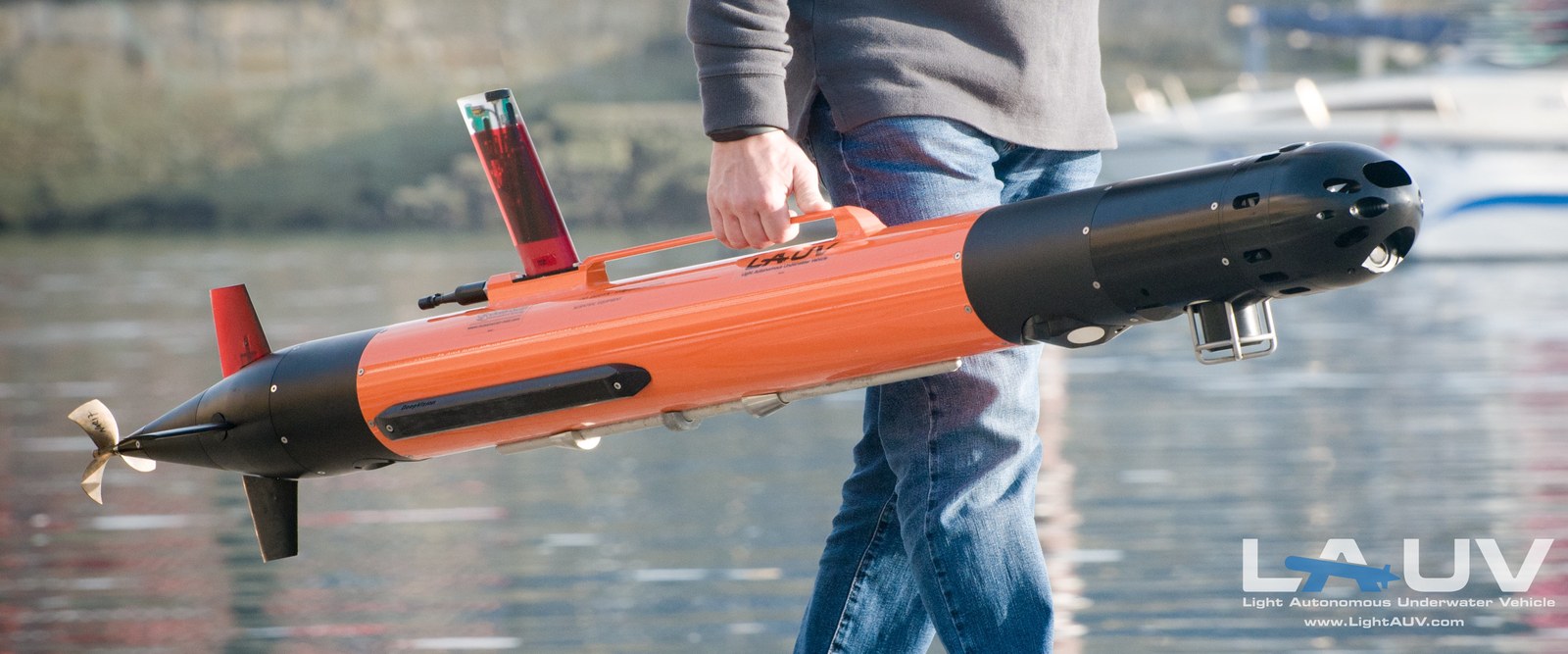
OceanScan MST is an independent Portuguese company founded in 2008 as a spin-off from the Underwater Systems and Technology Laboratory at University of Porto. Its LAUV is a man-portable autonomous underwater vehicle deployed worldwide with thousands of hours of real world operation. oceanscan-mst.com

About Subnero
Subnero develops underwater communication and networking technologies that aim to make underwater connectivity as seamless and scalable as connectivity on land, advancing the Internet of the Oceans. It serves defense, offshore energy, subsea, and research sectors worldwide. subnero.com

References
Image Credits
Photographs courtesy of the Acoustic Research Laboratory, National University of Singapore, and OceanScan Marine Systems & Technology.
The LAUV is now Subnero ready.
Advancing the Internet of the Oceans. Talk to us about software-defined acoustic networking.