The most important infrastructure of the digital age sits out of sight, on the seabed.
At the Shangri-La Dialogue, the launch of the Guiding Principles for Underwater Infrastructure Defence Exchanges (GUIDE) marked a shift in how the world treats the ocean floor. Subsea cables and energy links are no longer viewed only as engineering projects to be built and maintained. They are now recognised as pillars of national resilience, regional security and digital sovereignty.Consider the dependence. Close to 95 percent of the world’s internet and data traffic travels through subsea cables. Despite that, the space these cables run through stays one of the hardest places to observe, to communicate within and to act on quickly, and the difficulty only grows once you move past territorial waters.
That gap is exactly what needs to be closed next.
Securing this infrastructure cannot rely on watching the surface and sending repair teams once the damage is done. It calls for constant awareness underwater, communication systems that work across different platforms, a fast path from detection to response, and divers, sensors, autonomous vehicles and command teams that can function together as a single subsea network rather than as isolated parts.
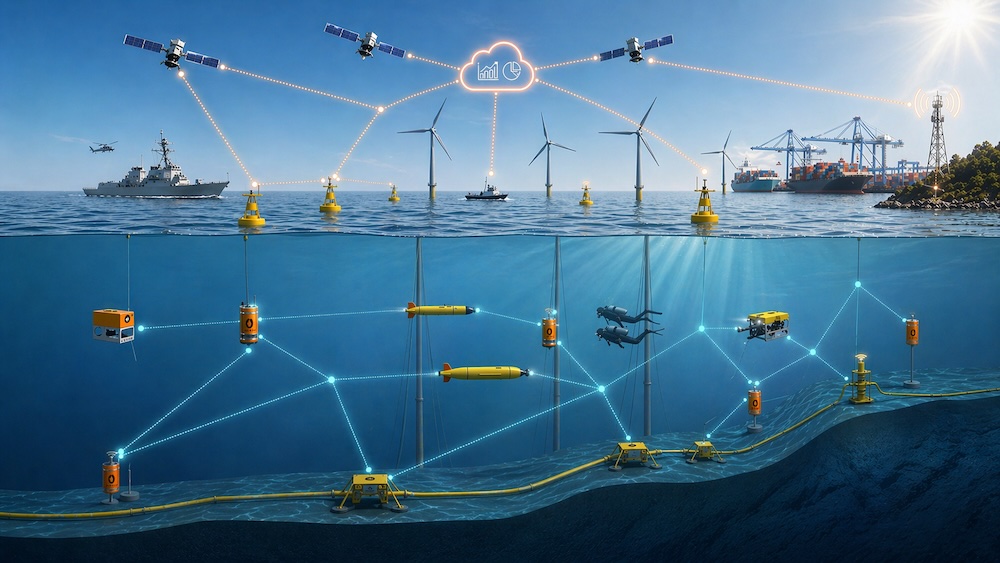 Subnero Underwater Network
This is the problem Subnero has focused on for years. We develop software defined underwater communication and networking technology that makes the underwater environment more connected, more visible and more responsive to what is happening within it.GUIDE arrives at the right moment for deeper international cooperation. The harder work begins now, in translating shared principles into capability that holds up in the field, across defence, maritime, energy, telecommunications and autonomous operations.
Resilience for critical infrastructure will not be decided above the waterline alone. It will come down to whether we can sense, communicate and coordinate beneath it.