Case Study
From Seabed to Shore
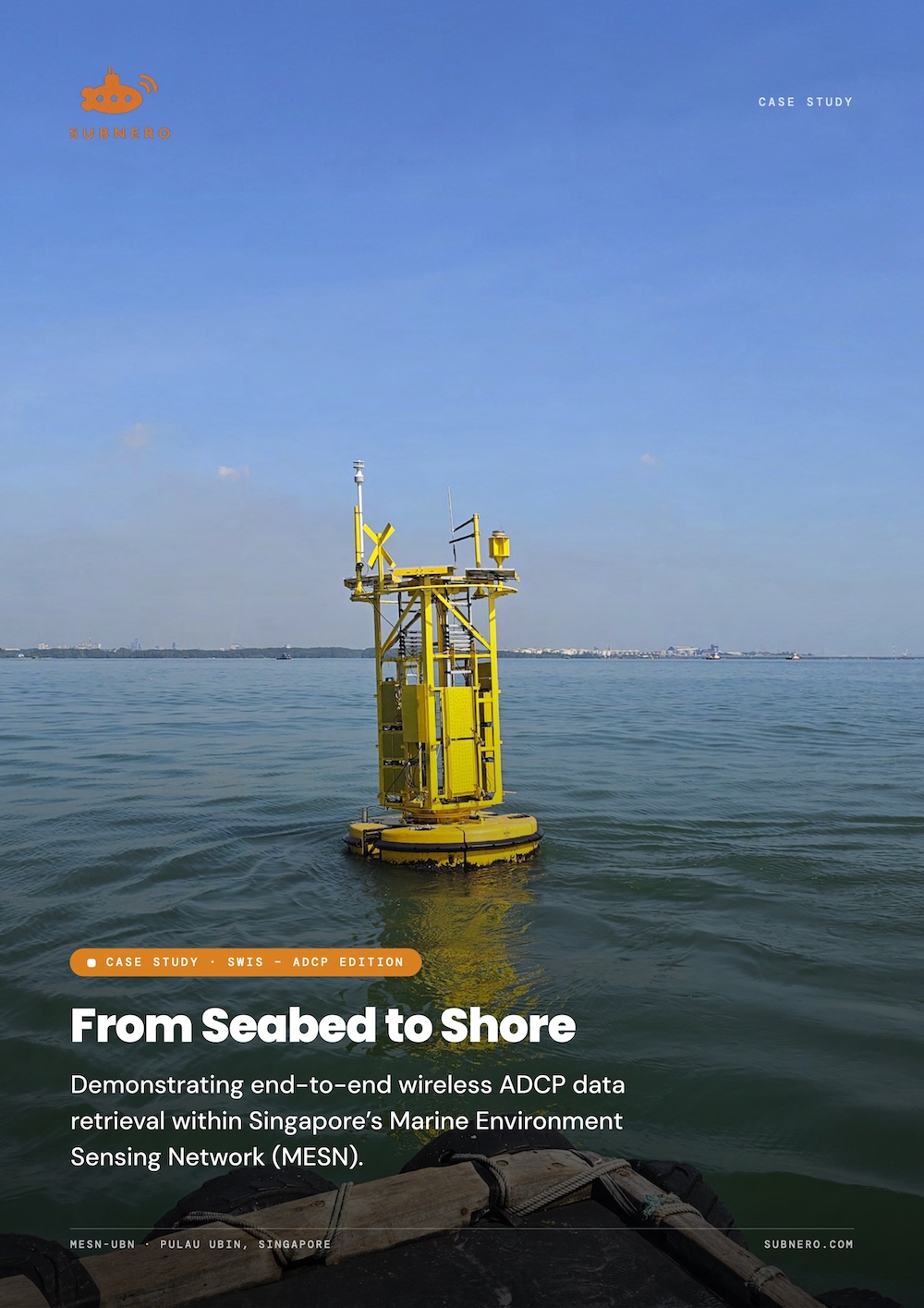
Demonstrating end-to-end wireless ADCP data retrieval within Singapore’s Marine Environment Sensing Network (MESN).
Why does MESN need reliable data off the seabed?
The Marine Environment Sensing Network (MESN) is a collaboration across several of Singapore’s research institutions. It runs three instrumented buoys around the island, each reporting more than thirty environmental parameters in real-time to the shared Ombak data platform.
Such an observatory is only as good as its weakest link. Surface sensors are easy to reach, but much of the most valuable data sits on the seabed, and getting it to shore reliably and often is the hard part.
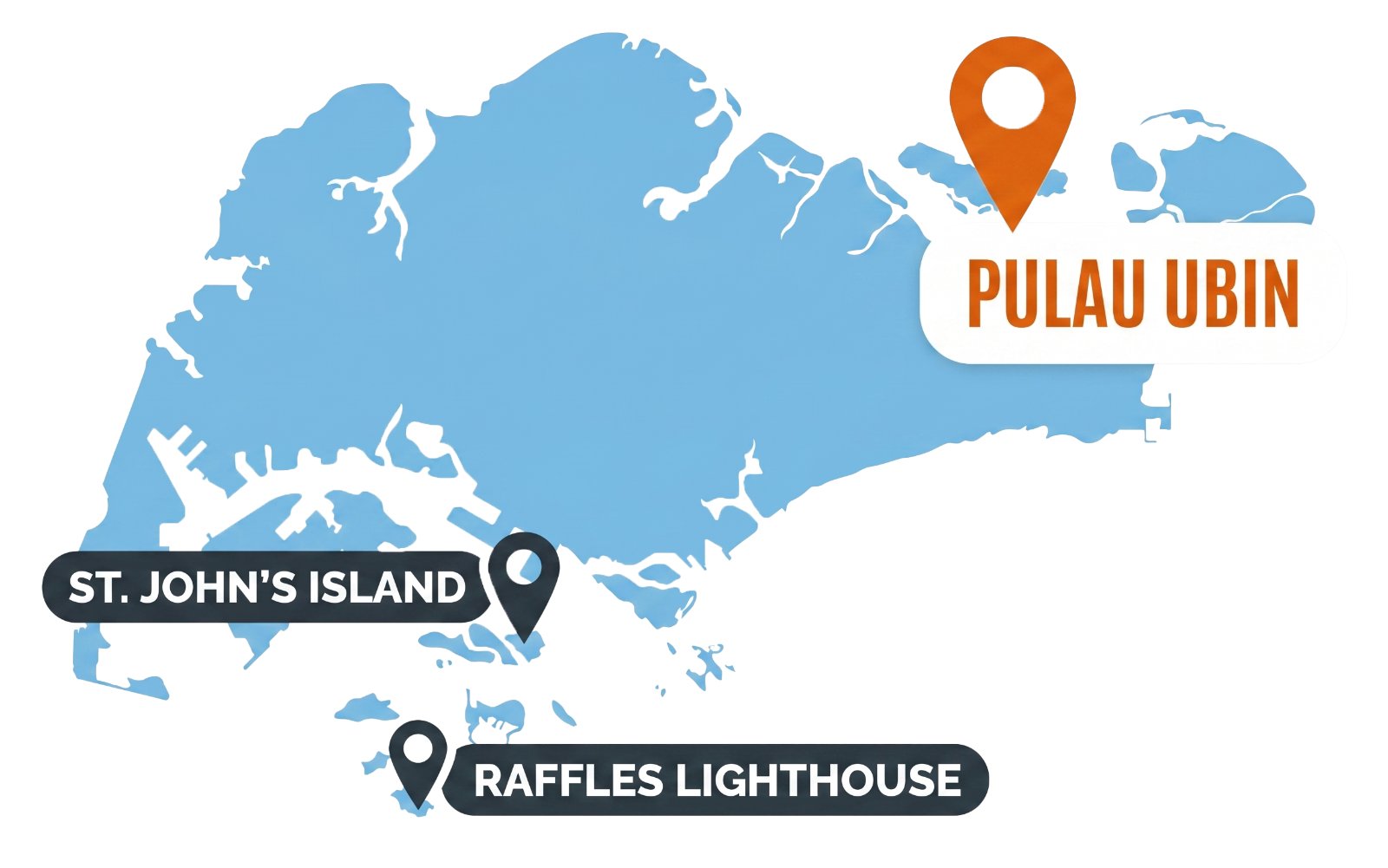
That is the gap the MESN-UBN buoy was chosen to close. The site sits off the eastern coast of Pulau Ubin, an estuarine environment shaped by freshwater runoff and nearby fish farms, representative of many coastal waters across Southeast Asia, and exactly the kind of busy, demanding place a marine link has to survive.
At a Glance
- Network: Marine Environment Sensing Network (MESN), Singapore
- Site: MESN-UBN (Pulau Ubin), one of three MESN buoys
- Seabed instrument: Nortek Aquadopp Profiler ADCP
- System: SWIS – ADCP Edition
- Deployment: Four months, Feb to Jun 2026
- Conditions: Tropical coastal channel, heavy shipping, high biological noise
Getting seabed data to shore
A seabed current profiler can record continuously for months. The difficulty is never the recording, it is data retrieval, and every traditional option carries a penalty. A cable to the surface is expensive and vulnerable in a busy channel. Divers are costly, weather dependent, and raise safety concerns, and the data is weeks old by the time anyone sees it. Even an acoustic link provided by a traditional acoustic modem can suffer reliability or performance issues under challenging conditions like Singapore’s, and it often stops at the buoy, leaving someone to build a separate system to move the data onward.
The goal at MESN-UBN was to demonstrate a single continuous path: from the instrument on the seabed, through the water, to the buoy, and on to a researcher at a desk, with no diver, no cable to the surface, and no separate data plumbing. In short, to validate that the whole chain could work unattended in Singapore waters.
SWIS – ADCP Edition, end-to-end
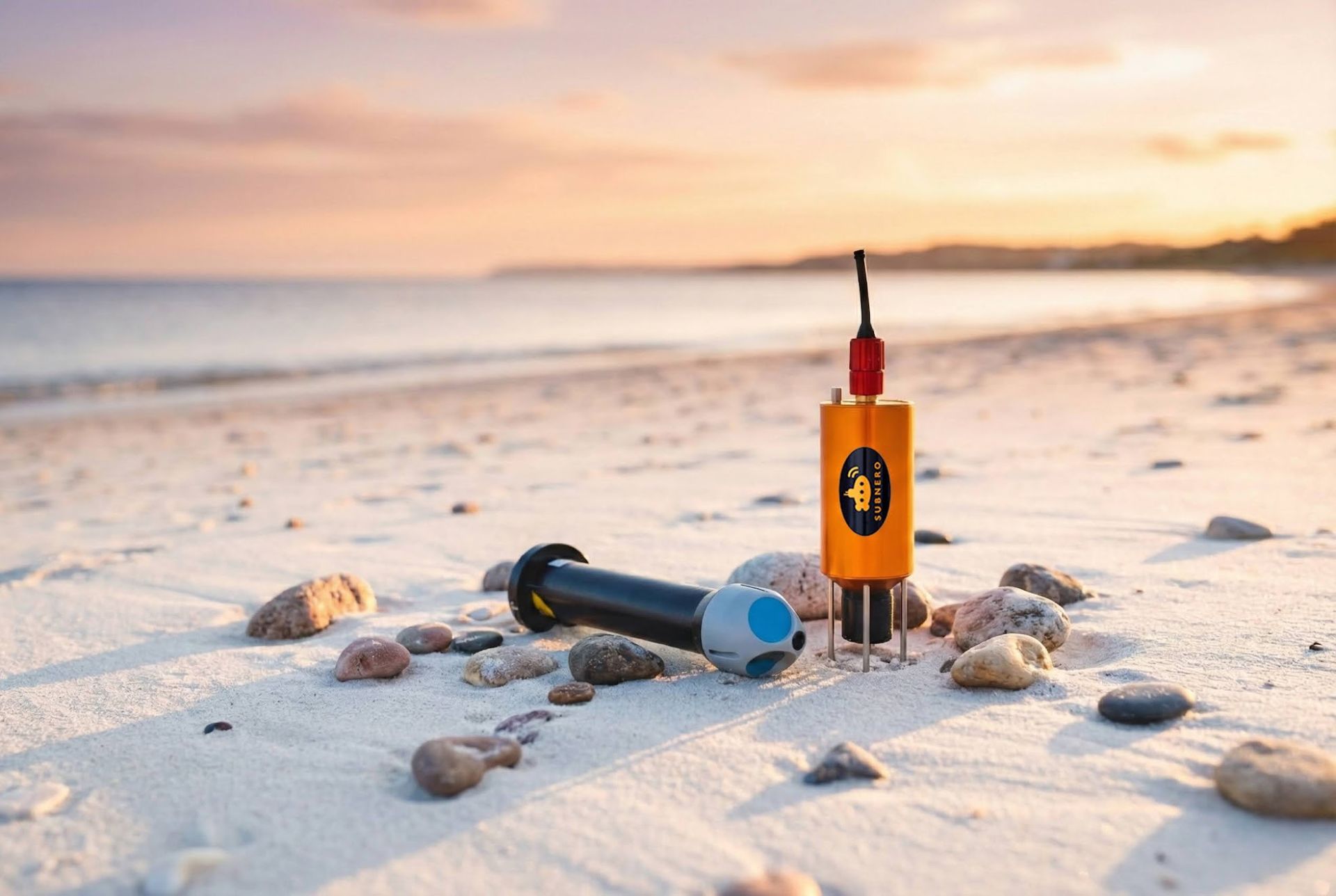
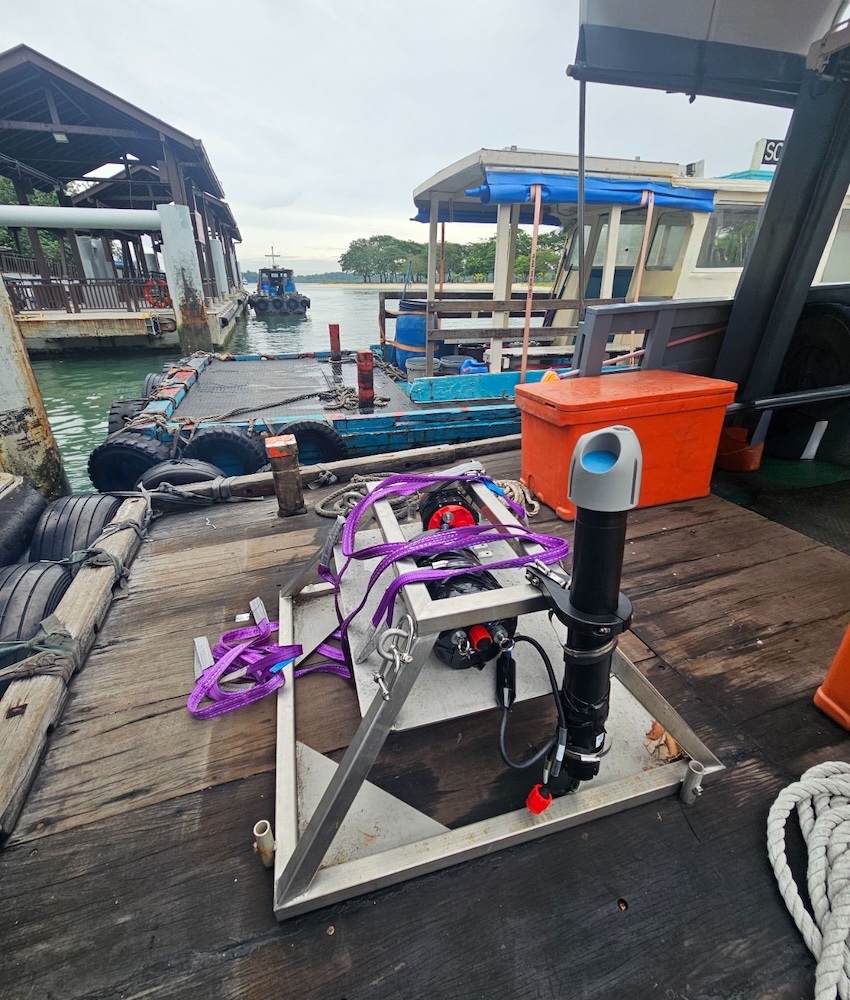
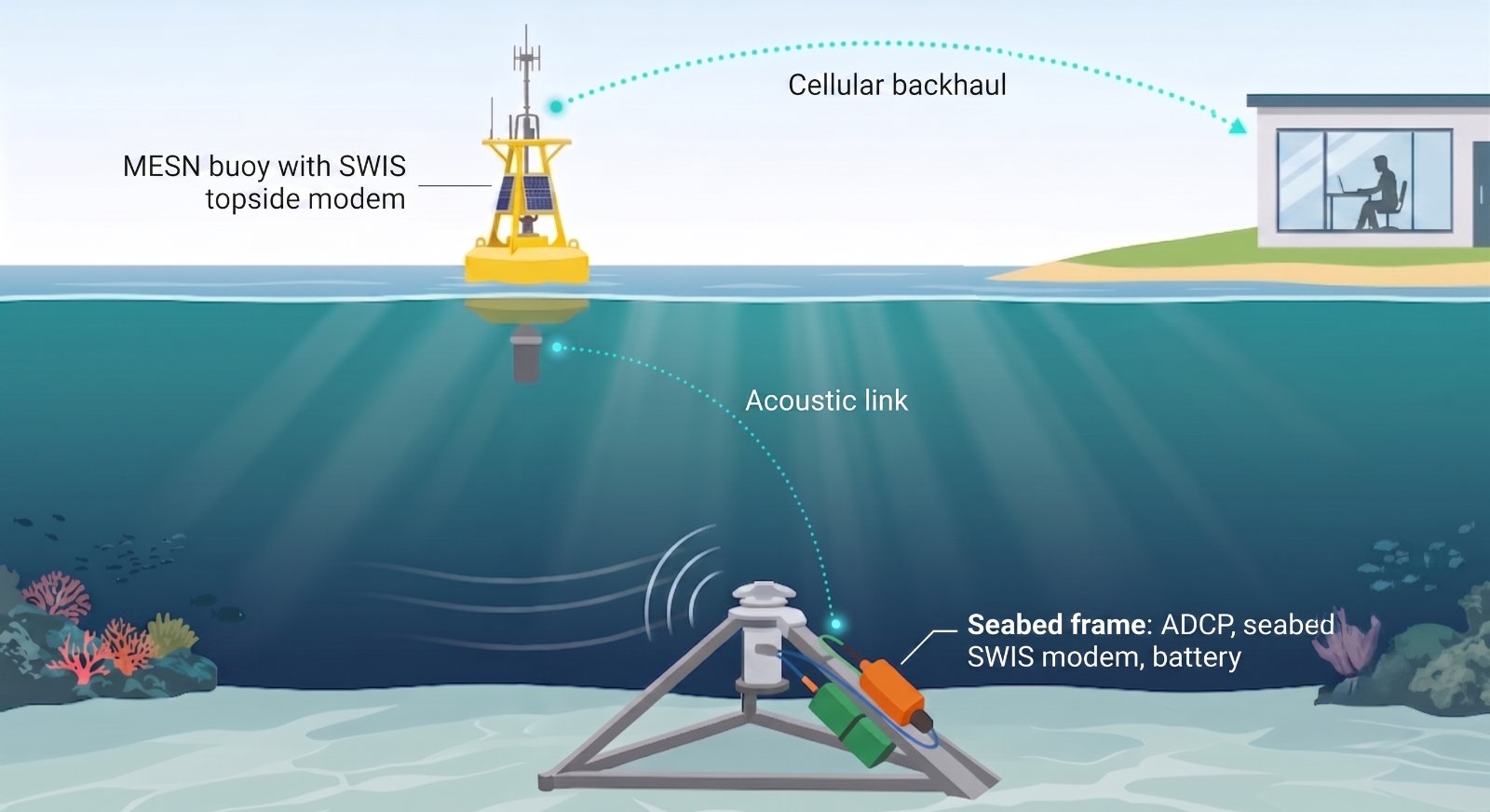
On the seabed, a lander held the Nortek Aquadopp Profiler ADCP as part of the Subnero Wireless Integrated Suite (SWIS) – ADCP Edition. The SWIS acoustic smart modem, from the Subnero WNC series, ran on its own external battery, separate from the instrument, so that the instrument’s power is independent of the acoustic link’s availability and performance. The seabed acoustic smart modem, as part of SWIS, carried data from the lander, through the MESN buoy, to the researcher’s office, using an acoustic link from the seabed SWIS modem to the topside SWIS modem on the buoy and a cellular backhaul from there, all seamlessly integrated within SWIS, so users did not have to build any additional infrastructure.
SWIS, powered by UnetStack, ran the communication layer the whole way, a seamless link from the seabed to the user. Instead of handing data off at the buoy, SWIS presented a single continuous connection, so a researcher on shore could work with the seabed instrument as though it were on the bench in front of them.
How it worked in practice?
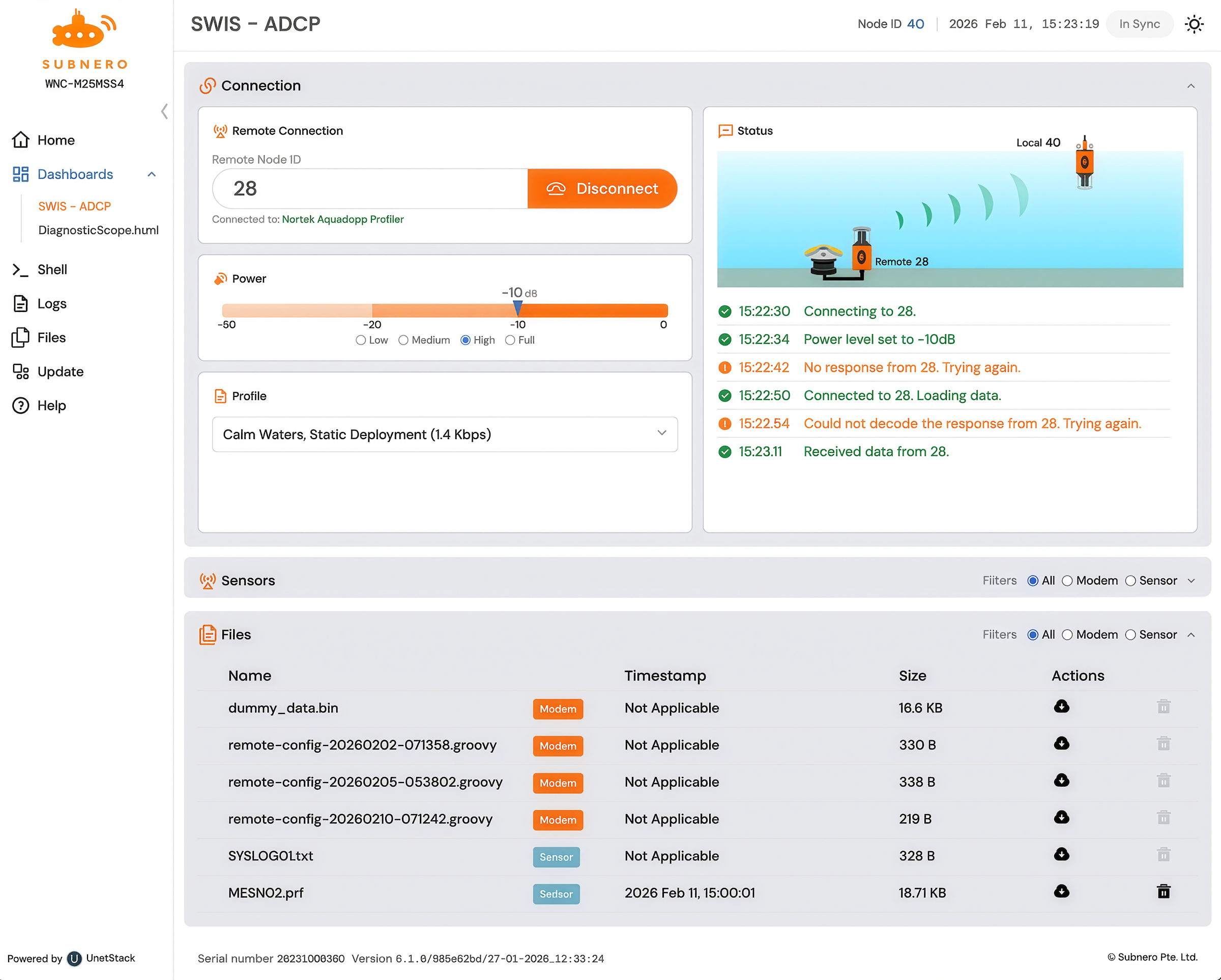
The deployment exercised the two ways researchers want to reach their data. In manual mode, a user opens a browser, connects to the topside modem and then to the seabed modem from there, sees the seabed device’s status and file list, and pulls down what they need, from the office, at any hour, without a vessel. In automatic mode, the modems wake on a set schedule, transfer data from the lander to the topside modem, and sleep again to save power, building up data on the surface so that users can access the topside modem remotely at any time to download it. The same deployment supported both at once.
Access was deliberately simple. Through the SWIS interface a file came down in about two clicks, with nothing to install and no specialist training, which is what makes the system usable by researchers rather than only by the engineers who built it.
The deployment also exercised something less common: control of the seabed setup after it was deployed. Working from shore, the team changed the lander’s configuration in the water, adjusting data collection frequency and switching modes, without recovering or revisiting the lander. This was validated as an experimental capability. Both modes worked.
Operating in challenging Singapore waters
The MESN-UBN site tested the link rigorously. Ambient noise is typically high in tropical waters: shipping fills these waters, and the biological background is just as loud, with snapping shrimp adding sharp, broadband noise across the modems’ band.
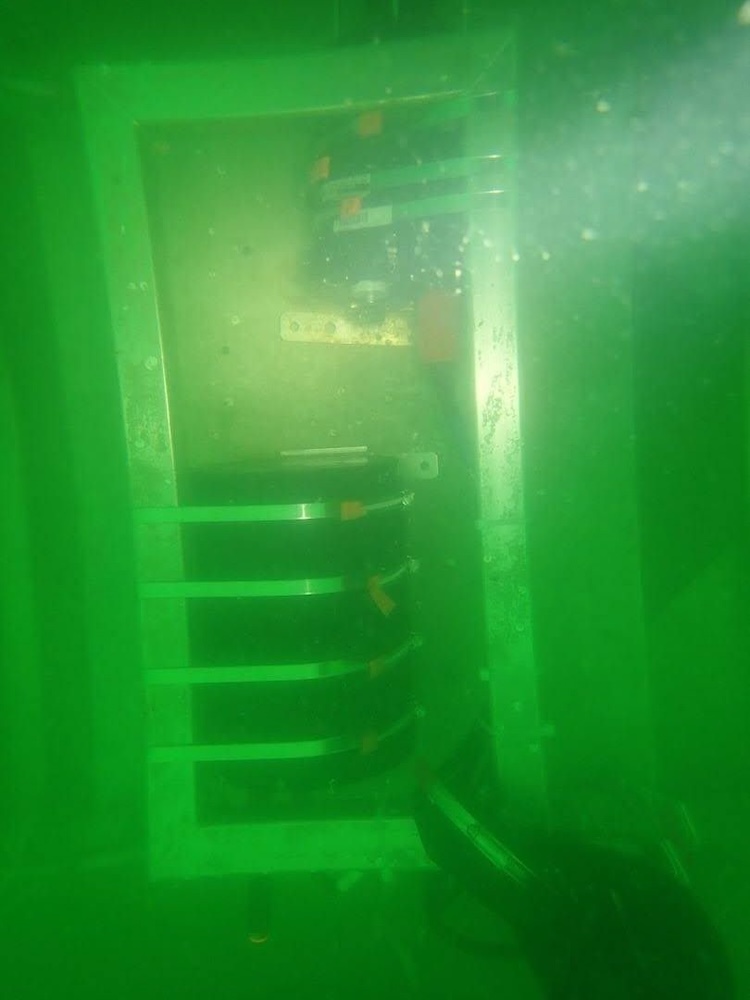
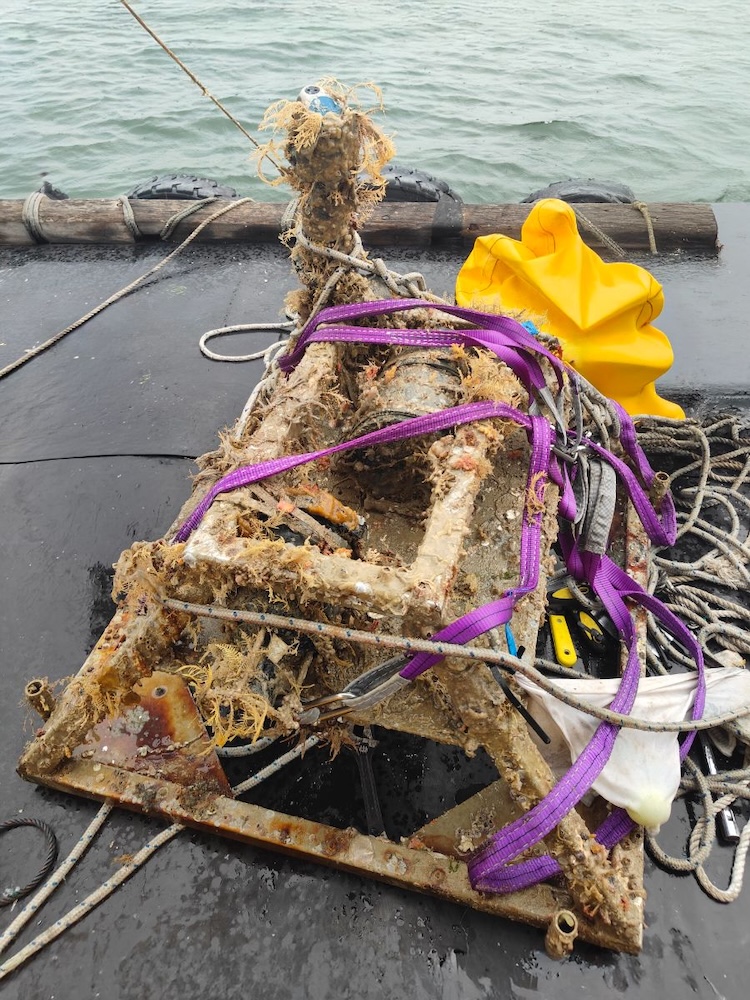
The water is also heavily turbid and biofouling builds up fast, one more reason a reliable acoustic link matters where optical methods struggle, and a reminder that a sustained observatory is an operational commitment. The modem’s independent battery and multiple stored copies of each file added redundancy, so a single point of trouble did not put the data at risk.
What the deployment validated
Across four months (Feb to Jun 2026):
- A single end-to-end path from the seabed instrument to a researcher on shore, with no cable and no diver.
- Remote access by distributed researchers, anytime and anywhere.
- Remote reconfiguration of the lander after deployment, validated as experimental.
- Both manual and automatic retrieval in one deployment.
- Simple operation, with downloads in about two clicks and no specialist training.
- Resilience to high noise, with an independent modem battery and redundant copies.
Where this goes next?
The approach scales well beyond a research buoy. SWIS – ADCP Edition is already deployed around the world, each deployment with its own concept of operation. The needs differ from site to site, but the common thread is the one demonstrated at Pulau Ubin: data delivered from the seabed to the user as a single connected path.
Offshore Energy: Between vessel visits
Retrieve seabed data on demand instead of sending a boat for every download.
Uncrewed Vehicles: A mobile gateway
Pair the topside node with a USV, so it no longer has to stay in one place.
Observatories: Low-touch delivery
On demand data access from long-running networks like MESN, with minimal field work.
It is great to see our collaborators validate their systems on MESN infrastructure, and good to be able to reach assets on the seabed from the comfort of our office.
Koay Teong Beng
Lead PI, Acoustic Research Laboratory (ARL)

Being able to download data from the office whenever we want makes our customers’ work much easier. They can focus on using the data instead of worrying about how to collect it.
Veronica Tan
Subsea IoT Engineer, Subnero

One connected path, demonstrated in the water.
The same end-to-end path is ready to adapt to your concept of operation, from a single lander to a network of sites.
About Subnero
Subnero builds underwater wireless communication and networking systems: the WNC series of smart modems, the UnetStack software stack, and the SWIS family of integrated solutions.
About MESN
Marine Environment Sensing Network (MESN) establishes instrumented buoys around Singapore for sustained, real-time marine observation, with data shared through the Ombak platform.
Talk to us about wireless data retrieval for your deployment.
Acknowledgements. This deployment was hosted on MESN infrastructure, in collaboration with the MESN team.